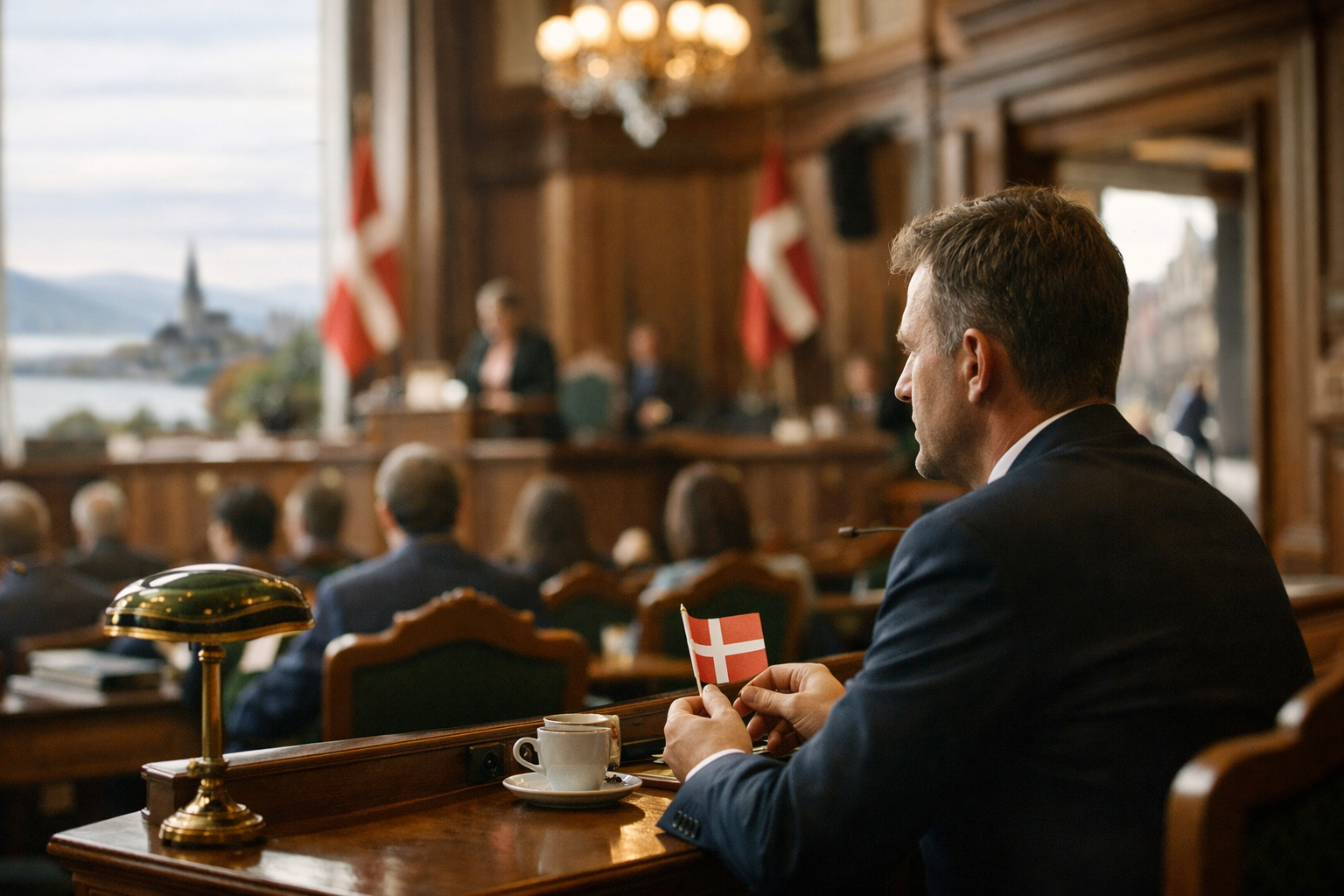
Women's Suffrage in Denmark: The 1915 Constitutional Amendment
Discover how Denmark became a pioneer in women's rights with the 1915 constitutional amendment granting women's suffrage. Learn the historical context, key figures, and why this matters for your Danish citizenship exam.

Introduction
When most people think of women's suffrage movements, they often picture the struggles in Britain or America. However, Denmark has a remarkable history as one of Europe's earliest adopters of women's voting rights. The 1915 constitutional amendment that granted Danish women the right to vote represents a pivotal moment in both Danish history and global women's rights movements. This historical milestone is not only essential knowledge for anyone preparing for the Danish citizenship test but also reflects the progressive values that continue to define Danish society today.
If you're studying Danish history and culture for your citizenship exam, understanding women's suffrage in Denmark is crucial. With tools like Danify, you can explore these important historical events in context and prepare thoroughly for exam questions about Danish democracy and constitutional changes.
The Path to Women's Suffrage: Pre-1915 Context
The Social and Political Climate
Denmark in the early 20th century was undergoing significant social transformation. The country had already established itself as a relatively progressive society, but women remained excluded from political participation. Several factors contributed to the eventual success of women's suffrage:
- Industrial development brought more women into the workforce, particularly in factories and agriculture
- Educational reforms increased female literacy and access to schooling
- Growing women's organizations began advocating openly for political rights
- International influence from neighboring countries' suffrage movements inspired Danish women
Unlike some European nations experiencing violent suffrage campaigns, the Danish women's movement operated in a society with existing constitutional protections and democratic traditions. This created a unique environment where change could occur through constitutional amendment rather than revolutionary struggle.
Women's Organizations and Key Advocates
Danish women didn't achieve voting rights through chance alone. Organized movements played a vital role in pushing for constitutional change. Women's associations emerged throughout Denmark, advocating for political equality while maintaining respectful dialogue with male-dominated institutions.
Key organizations included various cultural and political societies that brought together educated women who made compelling arguments for representation. These groups demonstrated that women possessed the knowledge, capability, and responsibility required for voting. Their campaigns emphasized that women's participation would strengthen Danish democracy rather than threaten it.
The 1915 Constitutional Amendment Explained
What Changed: The Voting Rights Expansion
The 1915 constitutional amendment represented a watershed moment for Danish women. Prior to this amendment, voting rights were restricted to men who met specific property and income requirements. The 1915 revision fundamentally altered this landscape:
- Women gained the right to vote in national (Folketing) elections
- Women achieved eligibility to stand as candidates for parliament
- The amendment applied to women who met the same age and residency requirements as men
- The change was implemented gradually, with full implementation occurring relatively smoothly
What makes Denmark's approach particularly noteworthy is that the amendment was part of a broader democratic reform package, not isolated to women's suffrage alone. This integration into larger constitutional discussions helped normalize women's political participation rather than treating it as a special or controversial issue.
Historical Significance and International Context
Denmark was exceptionally progressive compared to its European peers. Consider this timeline:
- 1913: Denmark's neighboring country Norway granted women's suffrage
- 1915: Denmark followed suit with its constitutional amendment
- 1919: Germany granted women's suffrage after World War I
- 1920: The United States passed the 19th Amendment
- 1928: Britain finally granted equal voting rights to all women
Denmark's 1915 amendment placed the nation among the world's earliest democracies to recognize women's political equality. This reflects the Danish commitment to progressive social values and democratic participation that continues today.
The Impact on Danish Democracy and Society
Women's Political Participation Post-1915
Following the 1915 amendment, Danish women gradually increased their presence in political life. The first woman elected to the Folketing came shortly after the amendment, demonstrating that the constitutional change translated into actual political participation. This early representation helped establish precedent for continued female involvement in governance.
The amendment's success in Denmark without significant social upheaval proved that women's suffrage could be integrated into existing democratic systems smoothly. This model influenced discussions in other countries and challenged arguments that women's voting would cause societal chaos.
Connection to Modern Danish Values
The 1915 constitutional amendment reflects values that remain central to Danish identity:
- Equality and fairness: Fundamental to Danish social democracy
- Democratic participation: Citizens' right to influence governance
- Pragmatic reform: Change implemented through constitutional means
- Social consensus: Reform achieved through dialogue rather than conflict
Understanding this historical commitment to equality helps explain modern Denmark's reputation for gender equality, progressive social policies, and strong democratic institutions.
Why This Matters for Your Danish Citizenship Exam
Key Concepts to Remember
When preparing for your Danish citizenship test with resources like Danify, focus on these essential points about the 1915 amendment:
- Date: 1915 constitutional amendment
- What changed: Women gained voting rights in national elections
- Why it happened: Social movements, women's organizations, and progressive political climate
- Impact: Denmark became one of Europe's earliest democracies to grant women's suffrage
- Modern relevance: Reflects Danish values of equality and democracy
Exam Preparation Tips
When studying this topic for your citizenship examination:
- Memorize the date 1915 as a key historical marker
- Understand the context: Know why Denmark was progressive for its time
- Connect to modern Denmark: Explain how this historical reform reflects current Danish democratic values
- Compare internationally: Be prepared to discuss how Denmark's timeline compares to other countries
- Practice essay answers: Prepare explanations of why constitutional amendments matter for democratic societies
Conclusion
The 1915 constitutional amendment granting women's suffrage represents far more than a historical footnote in Danish history. It demonstrates Denmark's commitment to democratic principles, gender equality, and progressive reform—values that define Danish society today. This pivotal moment shows how political change can occur through constitutional means when societies embrace democratic dialogue and respond to calls for justice.
For those preparing for the Danish citizenship test, understanding women's suffrage in Denmark provides insight into the nation's democratic traditions and commitment to equality. This historical knowledge will help you appreciate contemporary Danish values and answer citizenship exam questions about Danish democracy and constitutional history.
Ready to deepen your knowledge of Danish history and culture? Use Danify to explore more essential topics for your citizenship exam. Our app provides comprehensive, contextual learning that helps you understand not just facts, but the values and history that shape Denmark today. Start your preparation journey now and build the knowledge you need to succeed in your Danish citizenship test.
Sources & AI note
This article was generated by AI using the sources listed here. Please verify important details in the original sources.
Official Danish Parliament (Folketinget) source providing information about the Danish Constitution and its historical amendments, including women's suffrage reforms.
https://www.ft.dk/da/dokumenter/dokumenter/constitution
Comprehensive Danish encyclopedia with detailed historical information about women's suffrage movements and the 1915 constitutional amendment in Denmark.
https://denstoredanske.lex.dk/
Official Danish government immigration portal providing cultural and historical context about Denmark, including key historical events and democratic values.
https://nyidanmark.dk/en
Official Danish government website offering comprehensive information about Danish history, democracy, and cultural values including the country's progressive heritage.
https://denmark.dk/
International resource documenting women's political participation globally, including comparative timeline of women's suffrage across European countries including Denmark.
https://www.iknwp.org/
Get study tips in your inbox
Exam guides, study strategies, and insider tips for both Danish exams, delivered for free.
Study smarter
Ready to pass your Danish exam?
Danify gives you practice questions, AI-powered hints, and progress tracking, everything you need to prepare with confidence.