The Danish Reformation 1536: How It Changed Church and State
Discover how the Danish Reformation of 1536 transformed Denmark's religious landscape and established the Lutheran church as the state church. Learn why this pivotal historical event is essential for your Danish citizenship exam.
Introduction
The year 1536 marks one of the most transformative moments in Danish history. This was when King Christian III formally introduced the Reformation to Denmark, fundamentally reshaping the relationship between church and state, religious practice, and society itself. The Danish Reformation wasn't merely a religious upheaval—it was a political, social, and cultural revolution that would define Denmark for centuries to come.
If you're preparing for the Danish citizenship test, understanding the Reformation is essential. This event established core values that remain central to Danish identity today: religious freedom, state governance, and the relationship between institutions. Let's explore how 1536 changed everything.
The Religious and Political Context Before 1536
The Catholic Church's Dominance
Before 1536, Denmark was a staunchly Catholic nation. The Catholic Church wielded enormous power—both spiritually and politically. Bishops controlled vast territories and wealth, often rivaling the monarchy's authority. Monasteries owned significant land, and the church collected tithes from the population, creating resentment among both peasants and nobility.
This wealth concentration created tension. While the church preached poverty and humility, ecclesiastical leaders lived in luxury. Many Danes, particularly the educated classes and merchants, began questioning the church's practices and teachings.
Martin Luther's Influence Spreads North
Martin Luther's Protestant Reformation, which began in Germany in 1517, didn't remain confined to Central Europe. Lutheran ideas gradually spread to Denmark through trade networks, traveling scholars, and printed materials. By the 1520s, Protestant theology was gaining intellectual currency among Danish clergy and the nobility.
King Christian II initially resisted the Reformation, remaining loyal to Rome. However, his conflict with the Catholic Church over political authority—particularly regarding the appointment of bishops—created an opening for religious change. When Christian III ascended to the throne in 1534, the stage was set for dramatic transformation.
The Reformation of 1536: The Turning Point
The Royal Decree and Church Confiscation
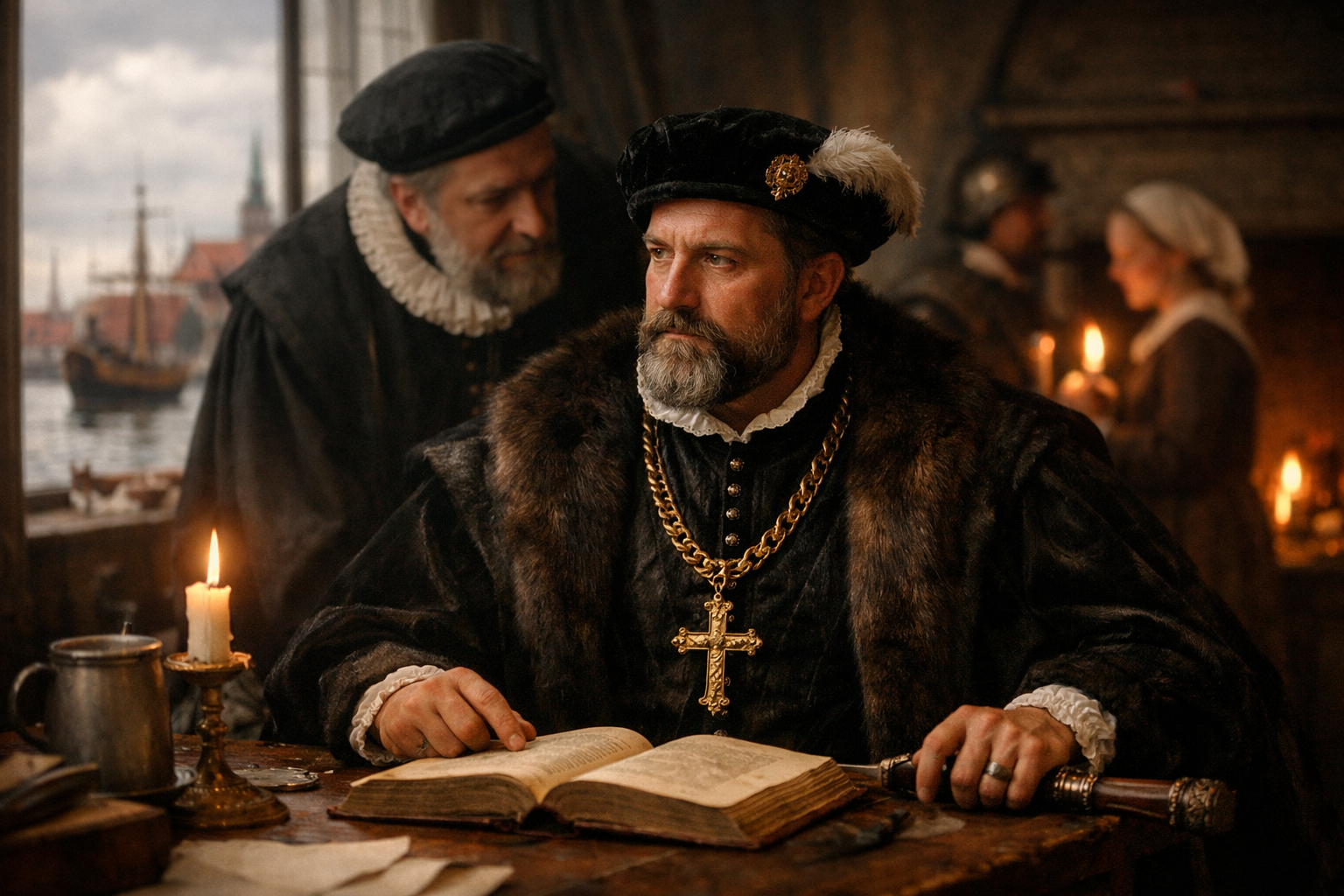
On October 30, 1536, King Christian III issued a decree that formally introduced Lutheranism as Denmark's official state religion. This wasn't simply a spiritual conversion—it was a carefully calculated political move.
The decree accomplished several objectives:
- Eliminated Catholic episcopal authority: All Catholic bishops were removed from power
- Seized church property: The crown confiscated vast church lands and wealth
- Established the Lutheran Church as state institution: The king became the supreme head of the Danish church
- Reformed clerical structure: Pastors replaced priests, and the focus shifted to preaching and Bible reading in Danish
This consolidation of power transformed the Danish monarchy. By controlling the church, Christian III dramatically increased royal authority and wealth, enabling him to strengthen the state apparatus and reduce noble influence.
The Role of Key Reformers
Jens Andersen Beldenak and other Danish reformers played crucial roles in translating Lutheran theology into Danish practice. These religious scholars helped establish new church structures and doctrines aligned with Protestant principles.
Unlike some European reformations marked by violence, the Danish transition was relatively orderly. The king's careful management meant that Catholic practices were gradually replaced with Lutheran ones, minimizing social disruption.
Religious, Social, and Political Transformations
Changes to Religious Practice
The Reformation brought sweeping changes to how Danes practiced Christianity:
- Vernacular worship: Services shifted from Latin to Danish, making religion accessible to ordinary people
- Bible emphasis: Printed Bibles in Danish became central to faith, rather than priestly interpretation
- Simplified ceremonies: Catholic rituals and saint veneration were replaced with simpler Lutheran practices
- Marriage of clergy: Priests could now marry, changing the nature of the priesthood
- Monastic dissolution: Monasteries were closed, and monastic lands were redistributed
Political Consolidation of Royal Power
The Reformation served Christian III's political agenda perfectly. By becoming head of the church, the king:
- Eliminated a rival power structure that had previously challenged royal authority
- Acquired enormous wealth through confiscated church property
- Used religious reform to strengthen ties with the nobility (who also benefited from church land distribution)
- Created a more centralized, efficient state apparatus
This transformation established a crucial principle in Danish governance: the state's ability to shape and control institutions, which continues to influence Danish political culture today.
Social and Educational Impact
The Reformation profoundly affected Danish society:
- Education expansion: Lutheran emphasis on Bible reading drove increased literacy. Schools expanded beyond monastic institutions
- Welfare restructuring: Since monasteries had provided social services, the crown assumed responsibility for poor relief
- Economic shifts: Confiscated church wealth fueled commercial and military development
- Social stability: By maintaining orderly transition, the reform avoided the religious wars that plagued other European nations
The Legacy: Why 1536 Still Matters Today
Establishment of the Evangelical Lutheran Church
The church established in 1536 remains Denmark's official state church (Folkekirken) today. While Denmark now has full religious freedom and the church is technically separate from state governance, the Evangelical Lutheran Church maintains a special constitutional status and receives state support.
This unique arrangement reflects the historical compromise reached in 1536: religious reform combined with state stability and order—values still central to Danish society.
Democratic and Egalitarian Foundations
The Reformation's emphasis on vernacular religion and direct access to scripture contributed to Danish egalitarianism. When ordinary people could read the Bible themselves and understand sermons in their own language, it challenged hierarchical religious structures and promoted individual agency.
These seeds of democracy and equality, planted in 1536, would flourish in later Danish democratic development.
Preparing for Your Citizenship Exam: Key Takeaways
When studying the Reformation for your Danish citizenship test, remember these essential points:
- Date: 1536 is the pivotal year when the Reformation became official
- King Christian III implemented the reform through royal decree
- Lutheran theology replaced Catholic doctrine as the state religion
- Church property was confiscated by the crown, strengthening royal power
- Vernacular worship made religion accessible to ordinary Danes
- The Evangelical Lutheran Church remains part of Danish identity today
Using study tools like Danify can help you organize these historical facts and understand how they connect to broader themes in Danish history and culture. The citizenship exam often tests your grasp of how historical events shaped contemporary Danish values.
Conclusion
The Danish Reformation of 1536 was far more than a religious event—it was a fundamental restructuring of Danish society. King Christian III's introduction of Lutheranism strengthened royal authority, redistributed wealth and power, and established religious practices that persist today. The reform created a uniquely Danish balance: state involvement in religious institutions combined with eventual religious freedom and democratic values.
For citizenship candidates, understanding 1536 provides crucial insight into how Denmark's institutions developed and why Danes value both order and individual liberty. The Reformation demonstrates that Denmark's identity was forged through deliberate, orderly change—a characteristic that continues defining Danish society.
As you prepare for your Danish citizenship exam, use resources like Danify to deepen your understanding of how the Reformation connects to modern Danish governance, values, and culture. History isn't just about dates and names—it's about understanding the forces that shaped the nation you're choosing to join.
Ready to master Danish history for your citizenship test? Start learning with Danify today.
Sources & AI note
This article was generated by AI using the sources listed here. Please verify important details in the original sources.
Official website of the Evangelical Lutheran Church of Denmark (Folkekirken), providing current information about Denmark's state church and its historical roots in the Reformation.
https://www.folkekirken.dk/
Den Store Danske is Denmark's comprehensive online encyclopedia, containing verified historical information about the 1536 Reformation and King Christian III's religious reforms.
https://denstoredanske.lex.dk/
Official Danish immigration and citizenship portal providing context on Danish values, history, and cultural identity relevant to citizenship candidates.
https://nyidanmark.dk/en/
Official Danish government website offering authoritative information about Danish history, including the Reformation and its lasting impact on Danish society.
https://denmark.dk/
Borger.dk is Denmark's official public portal containing reliable information about Danish institutions, history, and governance related to the Reformation period.
https://borger.dk/
Get study tips in your inbox
Exam guides, study strategies, and insider tips for both Danish exams, delivered for free.
Study smarter
Ready to pass your Danish exam?
Danify gives you practice questions, AI-powered hints, and progress tracking, everything you need to prepare with confidence.