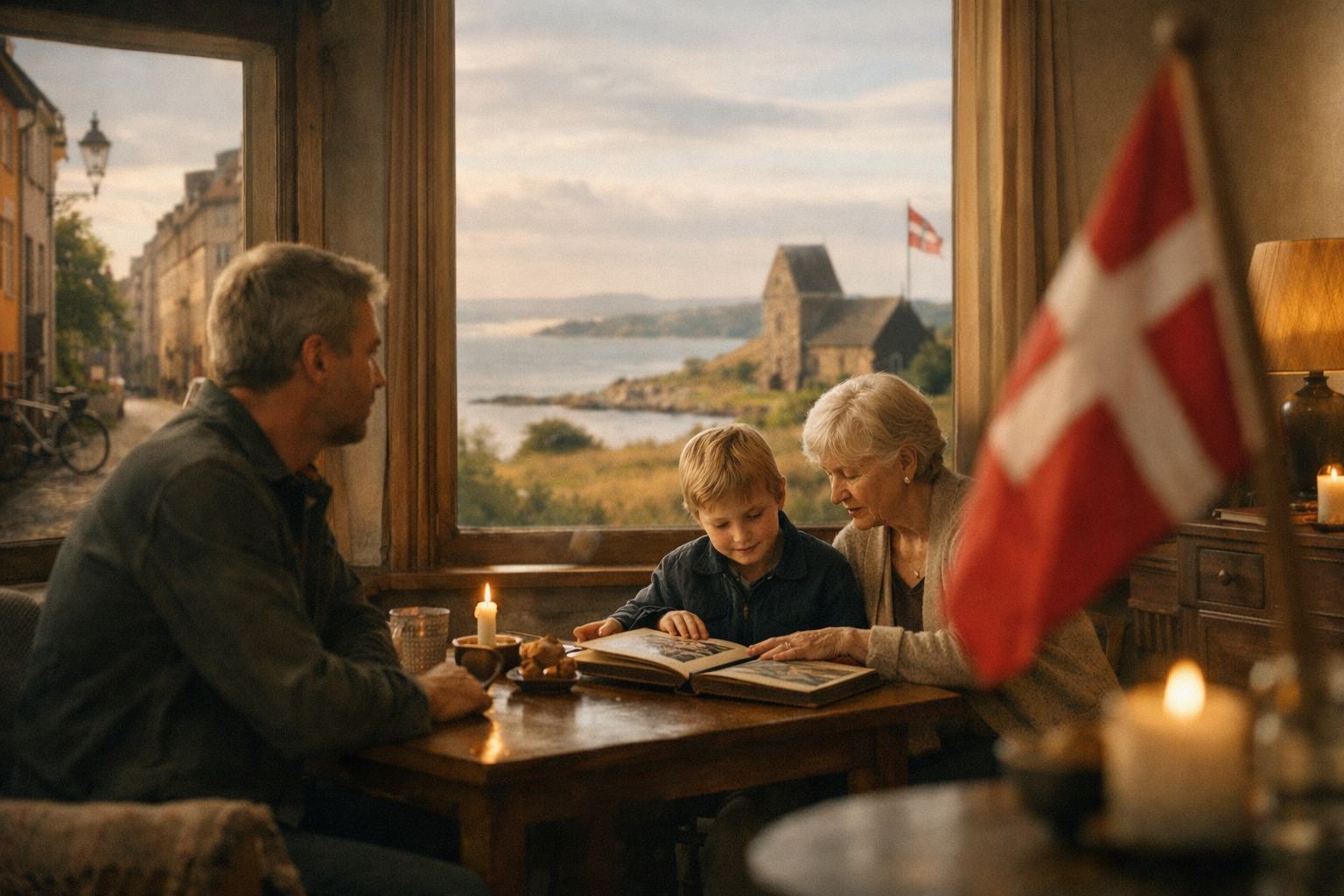
The 1864 War: Denmark's Defeat and Its Impact on National Identity
Discover how Denmark's devastating loss in the Second Schleswig War reshaped the nation's identity, territory, and cultural values. Essential knowledge for citizenship exam preparation.

Introduction
The year 1864 marks one of the most pivotal moments in Danish history. The Second Schleswig War, also known as the Danish-German War, resulted in a crushing military defeat that fundamentally transformed Denmark's geography, politics, and national consciousness. This conflict saw Denmark lose approximately one-third of its territory, including the duchies of Schleswig and Holstein, to the German Confederation. Yet paradoxically, this catastrophic defeat became a catalyst for profound cultural renewal and helped forge the modern Danish identity we recognize today.
For those preparing for the Danish citizenship test, understanding 1864 is crucial. The war's consequences ripple through Danish society, culture, and values even now, influencing everything from folk traditions to contemporary political attitudes. This article explores the war's causes, consequences, and lasting cultural impact—knowledge that will strengthen your understanding of Danish history and culture.
The Background: Why War Broke Out
Political Tensions and Constitutional Crisis
The roots of the 1864 conflict lay in the complex political arrangement of the Danish Monarchy. The kingdoms of Denmark and Norway, along with the duchies of Schleswig and Holstein, were joined in personal union under the Danish Crown. However, this arrangement was inherently unstable.
In 1863, King Christian IX signed the November Constitution, which attempted to integrate Schleswig more closely with Denmark. This action provoked outrage among German-speaking Holstein and the international German movement. The Holstein population, ethnically and culturally German, had long resented Danish dominance and sought closer ties with the German Confederation.
The German Response
Prussia and Austria, seeking to expand their influence in the region, seized upon the constitutional crisis as justification for military intervention. They formed an alliance and invaded Schleswig and Holstein in early 1864, citing protection of German interests. Despite heroic Danish resistance, particularly at the Battle of Dybbøl, the Danish forces were dramatically outnumbered and outgunned.
Key points to remember for your citizenship exam:
- The November Constitution was the immediate trigger
- Prussia and Austria were the primary antagonists
- The war lasted from February to October 1864
- Denmark's defeat was decisive and complete
The Immediate Consequences: Territory and Trauma
Territorial Losses
The Treaty of Vienna (1864) forced Denmark to cede Schleswig and Holstein to Austria and Prussia. This represented a catastrophic loss:
- Approximately one-third of Danish territory was surrendered
- Denmark's population decreased by roughly 30%
- The remaining kingdom became significantly smaller and more homogeneous
- Denmark lost its position as a major regional power
These losses were deeply traumatic for the Danish people. The defeat seemed to herald the end of Denmark as a meaningful political entity. Many contemporaries believed the nation's days as an independent state were numbered.
Economic and Political Repercussions
The war devastated Denmark's economy and military capacity. The nation:
- Lost valuable agricultural and trade resources in the conquered territories
- Faced massive war debts
- Had to rebuild its military from a position of extreme weakness
- Experienced a crisis of confidence in traditional monarchy and military power
Cultural Transformation: The Grundtvig Movement and Modern Danish Identity
The "Gjenkomst" (Comeback) Through Culture
Here's where the story becomes uniquely Danish. Rather than accepting national decline, Danish society underwent a remarkable cultural and spiritual renaissance. This transformation is essential context for understanding contemporary Danish values—and for excelling in your citizenship exam.
The intellectual and spiritual leader of this renewal was Nikolai Frederik Severin Grundtvig, a theologian, educator, and poet. Grundtvig argued that Denmark's true strength lay not in military or territorial power, but in its cultural heritage, education, and spiritual values. His philosophy shifted the national narrative from military defeat to cultural affirmation.
Grundtvig's Educational Legacy
Grundtvig founded the folk high school movement (folkehøjskole), which became instrumental in Danish national recovery:
- Folk high schools emphasized Danish language, history, and culture
- They taught practical skills alongside humanities and philosophy
- Education was democratic and inclusive, open to common people
- The movement spread rapidly throughout rural Denmark
- These institutions became centers of cultural preservation and nationalist sentiment
Today, over 70 folk high schools operate in Denmark, continuing Grundtvig's legacy. This educational approach reflects deeply held Danish values about community, lifelong learning, and democratic participation—values you'll encounter throughout your citizenship preparation.
The Rise of Modern Danish Culture
The post-1864 period witnessed an explosion of Danish cultural production:
- Literature and poetry flourished, with writers celebrating Danish identity
- Folk traditions were actively preserved and promoted
- Popular movements emerged, including cooperative associations and agricultural societies
- National symbols were reemphasized and celebrated
- The Danish flag (Dannebrog) gained renewed cultural significance
This cultural turn proved remarkably successful. By century's end, Denmark had transformed its national narrative from defeated empire to thriving cultural nation. The focus shifted from "what we lost" to "who we are."
Long-Term Impact on Danish National Identity
The Foundation of Modern Values
The 1864 defeat and subsequent cultural renaissance directly shaped core Danish values that persist today:
- Egalitarianism: The democratic folk high school movement established expectations of social equality
- Cultural pride without militarism: Denmark chose cultural over military strength
- Community and cooperation: Cooperative movements became central to Danish society
- Education and enlightenment: High value placed on learning and intellectual development
- Janteloven (The Law of Jante): The cultural code emphasizing modesty and community over individual superiority, arguably influenced by post-1864 cultural reformation
Modern Implications
Understanding 1864 illuminates contemporary Denmark:
- Why Denmark maintains a relatively small military
- Why cultural institutions receive substantial public funding
- Why education is universally valued and publicly supported
- Why cooperative businesses and democratic participation remain strong
- Why Danes emphasize "hygge" and community rather than material or military dominance
Preparing for Your Citizenship Exam with Danify
The 1864 war and its consequences appear regularly in Danish citizenship tests because they're fundamental to understanding Danish culture and values. When studying with Danify, focus on:
- Key dates and territorial changes
- The role of Grundtvig and folk high schools
- How defeat transformed into cultural renaissance
- The values this history instilled in Danish society
- How 1864 shaped modern Danish attitudes toward cooperation, education, and community
Use Danify's interactive study modules to test your knowledge of this crucial period, ensuring you can confidently discuss Denmark's most defining historical moment.
Conclusion
The 1864 war represents a crucial turning point in Danish history. What appeared to be national catastrophe became, paradoxically, the crucible in which modern Danish identity was forged. Through military defeat, Denmark discovered its true strength—cultural, educational, and spiritual rather than territorial or military.
This transformation from empire to culture, from military power to democratic enlightenment, defines Denmark today. For citizenship candidates, grasping this narrative is essential. It explains why Danes value education, community, equality, and cultural expression so profoundly.
Ready to master Danish history and culture? Start your citizenship exam preparation with Danify today. Our comprehensive study platform breaks down complex historical topics into engaging, exam-focused modules that help you understand not just the facts, but the cultural values underlying them.
Begin your journey toward Danish citizenship with confidence. Download Danify now.
Sources
For further reading and verification, consult these authoritative sources about 1864 and Danish history.
Sources & AI note
This article was generated by AI using the sources listed here. Please verify important details in the original sources.
Official Danish government resource providing comprehensive overview of Danish historical periods, including the 1864 war and its significance to national development.
https://danmark.dk/en/about-denmark/history/
Information about Denmark's Ministry of Culture, including resources on folk high schools (folkehøjskole) and their historical role in Danish cultural renaissance following 1864.
https://kum.dk/en/
Official Danish immigration portal providing cultural context and historical background essential for citizenship exam preparation, including information on Danish values and historical foundations.
https://nyidanmark.dk/en
Comprehensive reference on Nikolai Frederik Severin Grundtvig, the theologian and educator whose folk high school movement transformed Denmark after the 1864 defeat, establishing modern Danish educational values.
https://en.wikipedia.org/wiki/Nikolai_Frederik_Severin_Grundtvig
Den Store Danske provides authoritative historical information on the 1864 war, territorial losses, and the political/cultural consequences that shaped contemporary Danish society and values.
https://denstoredanske.lex.dk/
Get study tips in your inbox
Exam guides, study strategies, and insider tips for both Danish exams, delivered for free.
Study smarter
Ready to pass your Danish exam?
Danify gives you practice questions, AI-powered hints, and progress tracking, everything you need to prepare with confidence.