How Danish Elections Work: Proportional Representation Explained
Understanding Denmark's electoral system is essential for citizenship test candidates. Learn how proportional representation works and why it shapes Danish politics.
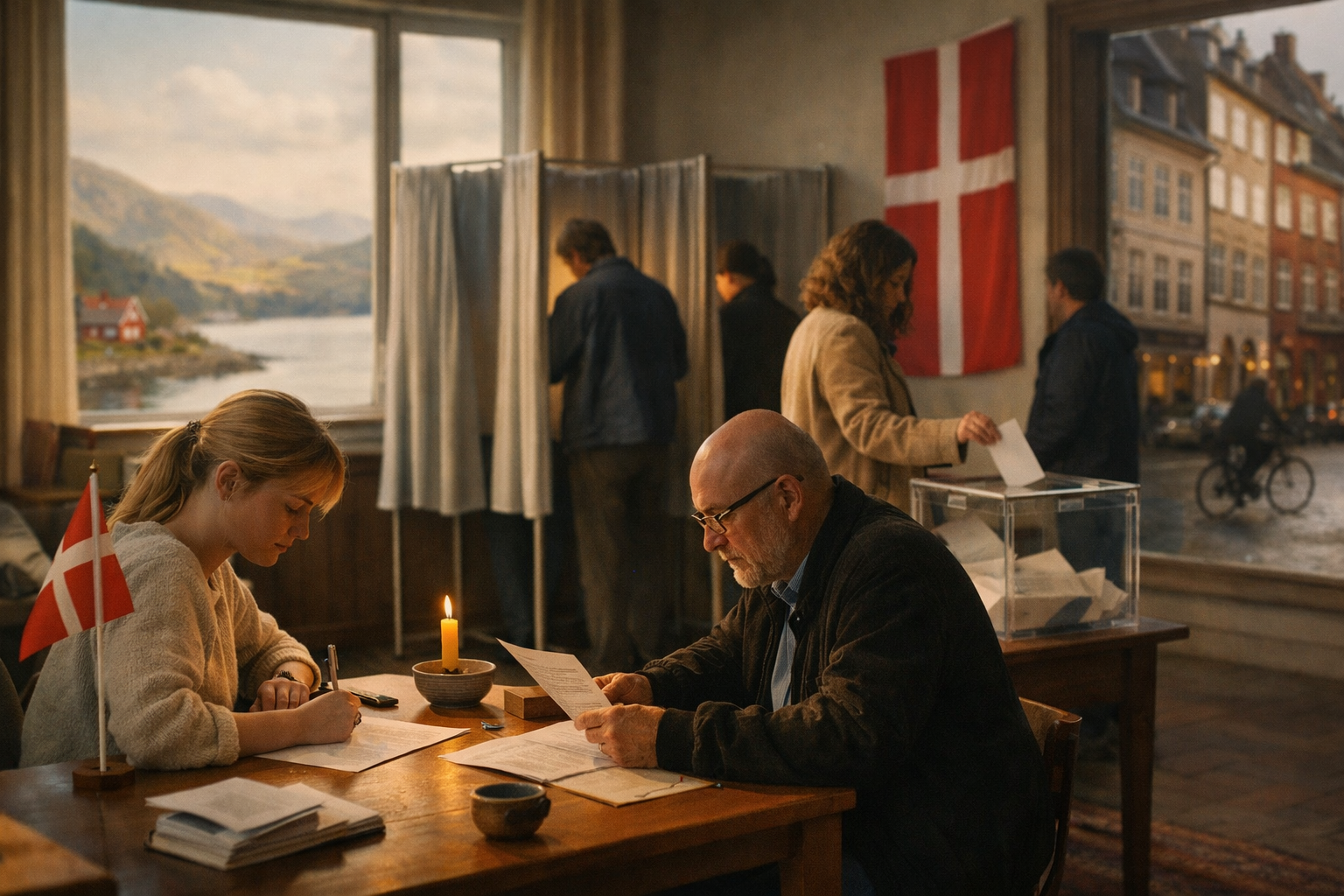
Understanding Danish Elections: A Guide to Proportional Representation
If you're preparing for the Danish citizenship test, understanding how Danish elections work is crucial. Denmark uses a proportional representation system, which is fundamentally different from the "first-past-the-post" electoral systems used in countries like the United States or United Kingdom. This system ensures that political parties receive parliamentary seats proportional to the number of votes they receive nationwide. Whether you're studying independently or using Danify to prepare for your citizenship exam, grasping these electoral mechanics will strengthen your knowledge of Danish democracy.
The Danish Electoral System Explained
What is Proportional Representation?
Proportional representation (PR) is an electoral system designed to allocate seats in parliament based on the percentage of votes each party receives. In Denmark, if a party receives 10% of the national vote, they should receive approximately 10% of the seats in the Folketing (the Danish parliament).
This contrasts sharply with winner-takes-all systems where the candidate with the most votes wins the seat, regardless of the margin. The Danish system encourages coalition-building and ensures that minority parties have a voice in parliament, making it a truly representative democracy.
The Two-Tier System
Denmark's proportional representation operates through a two-tier system:
- Tier 1 (Regional Seats): 175 seats are distributed among Denmark's 10 multi-member constituencies based on regional voting patterns. Each region elects multiple representatives.
- Tier 2 (Adjustment Seats): 40 additional "leveling seats" are allocated nationally to ensure the final distribution matches the overall national vote share as closely as possible.
This system guarantees that small parties aren't completely shut out of parliament, promoting political diversity and cooperation.
How Voting Works in Practice
The Voting Process
Danish citizens eligible to vote receive a ballot listing candidates from various parties. Here's what you need to know:
- Election Day: Parliamentary elections are held on a date set by the Prime Minister, typically within a 4-year period. The most recent general election was held in 2022.
- Who Can Vote: All Danish citizens aged 18 and over with legal residency can vote. This is important for citizenship test candidates to understand.
- Voting Method: Voters cast their ballot by selecting a party or specific candidate within that party. They can vote for an individual candidate (personligt valg) or simply mark the party itself.
The Vote Distribution Process
Once voting concludes, vote counting and seat distribution follow the d'Hondt method, a mathematical formula that converts votes into parliamentary seats. This method:
- Counts all votes received by each party
- Divides the vote totals by consecutive integers (1, 2, 3, etc.)
- Allocates seats to the highest resulting quotients
- Ensures proportional representation across all tiers
While the mathematics may seem complex, understanding this basic principle—that more votes equal more seats—is essential for citizenship test preparation.
The Role of Political Parties and Coalition Building
Why Coalitions Matter
Because Denmark's proportional representation rarely produces a single party with an outright majority, coalition governments are the norm. After an election, parties must negotiate to form a government with at least 90 seats (out of 179 in the Folketing).
This system encourages:
- Compromise and consensus: Parties must negotiate and find common ground
- Representation of diverse interests: Smaller parties retain influence in government
- Political stability: Coalition agreements typically last an entire parliamentary term
The Prime Minister's Role
The Prime Minister is typically the leader of the largest party, but they must assemble a coalition of parties willing to support their government agenda. Sometimes, even parties outside the formal coalition provide crucial "support" votes in parliament.
Key Electoral Thresholds and Rules
The Electoral Threshold
While Denmark has no official formal electoral threshold, parties must achieve a significant vote share to gain representation. Practically speaking, this means:
- Parties need substantial support to win seats in most circumstances
- Very small parties may struggle to achieve representation
- The threshold is effectively around 0.67% due to the mathematical distribution system
Important Voting Rules
When preparing for the citizenship exam with resources like Danify, remember these regulations:
- Voting is voluntary: Unlike some countries, voting is not compulsory in Denmark
- Candidate eligibility: Candidates must be Danish citizens aged 18 or older
- Campaign regulations: Political campaigns are regulated to ensure fair competition
- Voting rights: EU citizens with residency can vote in local and European elections, but only Danish citizens vote in parliamentary elections
Practical Tips for Your Citizenship Exam
When studying electoral systems for the Danish citizenship test:
- Focus on the basics: Understand that Denmark uses proportional representation, not first-past-the-post
- Remember the structure: Know that the Folketing has 179 seats (175 regional + 4 for Greenland and the Faroe Islands, with 40 leveling seats)
- Understand coalition importance: Recognize that governments are typically coalitions, not single-party governments
- Know voting age and citizenship requirements: You may be asked about who can vote in Danish elections
- Practice explaining it simply: Be able to explain proportional representation in plain language
Using study tools like Danify can help reinforce these concepts through interactive practice questions and explanations specifically designed for citizenship test candidates.
Conclusion: Democracy in Action
Denmark's proportional representation system is a cornerstone of its democratic identity. By ensuring that parliamentary seats reflect the votes parties receive, Denmark maintains a truly representative government where diverse political voices are heard. Understanding how this system works—from the two-tier voting structure to coalition formation—demonstrates your grasp of Danish political fundamentals.
As you prepare for your Danish citizenship test, take time to truly understand these electoral principles rather than simply memorizing facts. Visit official resources, consider using comprehensive study platforms like Danify, and engage with the material actively. Your ability to explain Denmark's electoral system confidently will demonstrate genuine understanding of how this important democracy functions.
Ready to master Danish citizenship test topics? Start studying with Danify today and access practice questions, detailed explanations, and study guides covering all essential areas including government, elections, and Danish culture.
Sources & AI note
This article was generated by AI using the sources listed here. Please verify important details in the original sources.
Official Danish election authority website providing comprehensive information about electoral procedures, voting rights, candidate eligibility, and parliamentary elections in Denmark.
https://www.valg.dk/in-english
Official Danish Parliament website explaining how elections to the Folketing work, including information about the electoral system, voting procedures, and parliamentary structure.
https://www.ft.dk/en/about-the-folketing/the-members-of-the-folketing/elections-to-the-folketing
Official Danish immigration and integration authority providing information about citizenship requirements, voting rights, and integration into Danish society.
https://www.nyidanmark.dk/en/about-the-danish-agency-for-international-recruitment-and-integration
Official Danish government portal with information about the Danish political system, parliamentary elections, government structure, and democratic principles.
https://denmark.dk/society-and-business/politics-and-government
Official Danish citizen portal providing authoritative information about the electoral system, voting procedures, and governmental structures for residents and citizenship candidates.
https://www.borger.dk/
Get study tips in your inbox
Exam guides, study strategies, and insider tips for both Danish exams, delivered for free.
Study smarter
Ready to pass your Danish exam?
Danify gives you practice questions, AI-powered hints, and progress tracking, everything you need to prepare with confidence.