Denmark in World War II: Occupation, Resistance and Liberation
Discover how Denmark experienced World War II — from the German occupation in 1940 to the courageous resistance movement and the joy of liberation in 1945. Essential knowledge for the Danish citizenship test.
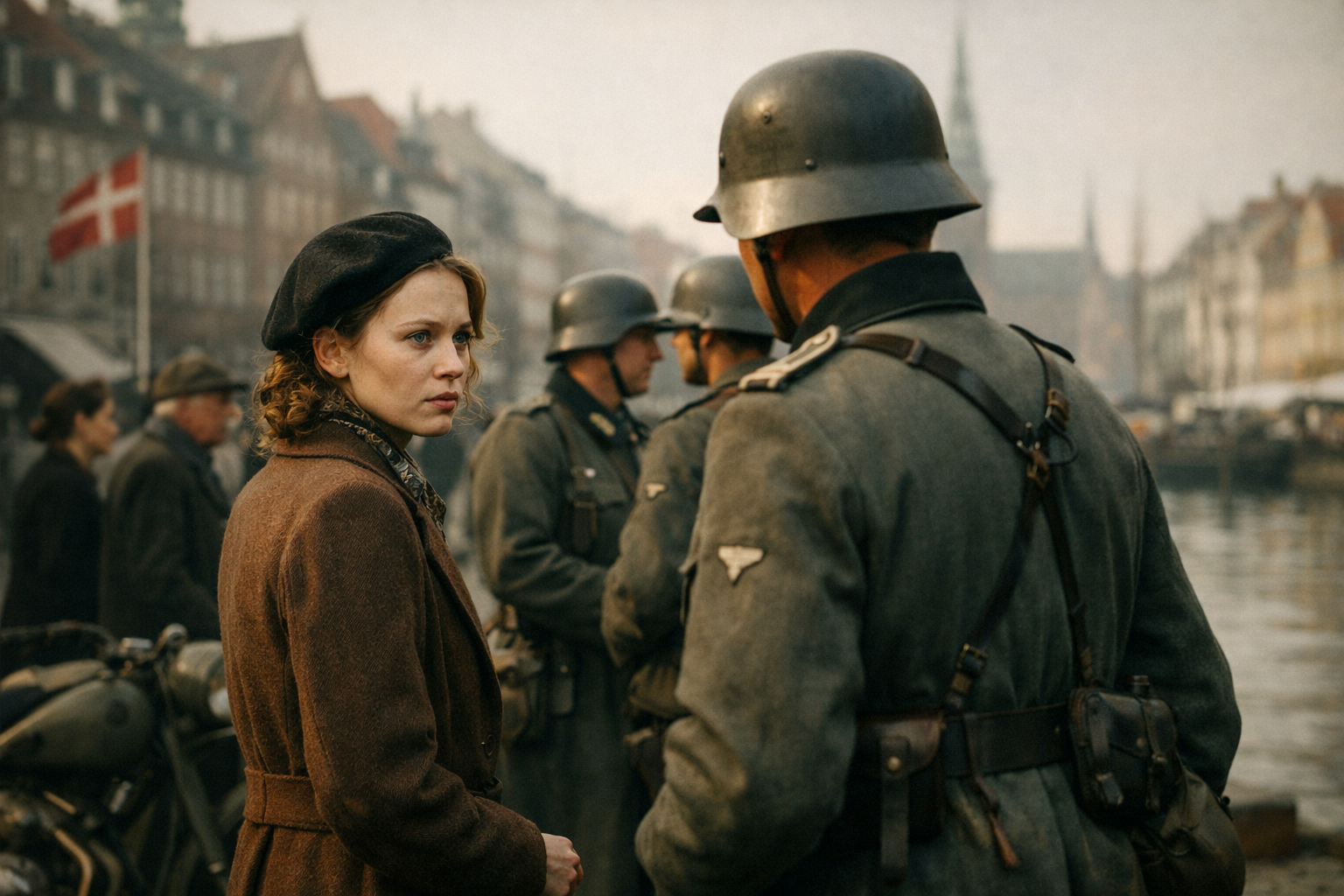
Denmark Under German Occupation (1940–1945)
On 9 April 1940, Germany invaded Denmark in a swift military operation that lasted just a few hours. The Danish government, facing an overwhelming military force and seeking to protect civilian lives, chose to cooperate with the occupying power rather than engage in armed resistance. This controversial decision shaped the entire occupation period and remains one of the most debated chapters in Danish history.
Unlike many occupied countries, Denmark initially retained its government, parliament, and institutions — a situation historians often describe as a "negotiated occupation." The Danish king, King Christian X, remained in Denmark and became a powerful symbol of national unity, famously continuing his daily horseback rides through Copenhagen without a German escort.
The Policy of Cooperation
From 1940 to 1943, the Danish government pursued a policy of pragmatic cooperation with Nazi Germany. The rationale was to maintain order, protect Danish citizens, and preserve as much national sovereignty as possible. Denmark continued to supply Germany with food and industrial goods throughout this period.
- The Danish parliament (Folketing) continued to function until August 1943
- Danish police and courts remained operational under Danish authority
- The Danish military was disarmed but not immediately disbanded
The Turning Point: August 1943
By the summer of 1943, the political situation changed dramatically. A wave of strikes and civil unrest swept across Danish cities, and acts of sabotage against German interests multiplied. On 29 August 1943, Germany declared a state of emergency and dissolved the Danish government, placing the country under full military occupation.
From this moment forward, Denmark was governed directly by German military authorities, and the Danish resistance movement grew rapidly in both size and boldness.
The Rescue of the Danish Jews
One of the most remarkable events of the occupation occurred in October 1943, when the Nazis planned to deport Danish Jews to concentration camps. Ordinary Danish citizens — fishermen, neighbors, colleagues, and strangers — organized a spontaneous and extraordinary rescue operation.
Over the course of just a few weeks, approximately 7,000 Jews were secretly ferried across the Øresund strait to neutral Sweden in fishing boats. This act of collective courage saved the vast majority of Denmark's Jewish population and stands as one of the most celebrated episodes of humanitarian resistance in World War II history.
Exam tip: The rescue of the Danish Jews is frequently referenced in the Danish citizenship test. Remember the year (1943), the destination (Sweden), and that it was organized by ordinary citizens — not the government.
The Danish Resistance Movement
As the occupation wore on, organized resistance became a defining feature of Danish wartime experience. The Danish resistance movement (in Danish: modstandsbevægelsen) carried out acts of sabotage, published illegal newspapers, and gathered intelligence for the Allied forces.
Sabotage and Underground Networks
Resistance groups such as Holger Danske carried out hundreds of sabotage operations targeting German infrastructure, factories producing goods for the Nazi war effort, and railway lines used to transport troops and supplies.
- Underground newspapers informed the Danish public about the true state of the war
- The Freedom Council (Frihedsrådet), established in 1943, coordinated resistance activities
- Danish resistance fighters worked closely with British intelligence (SOE — Special Operations Executive)
- By 1945, the resistance movement had grown to include tens of thousands of active participants
The Human Cost
Resistance came at a severe price. Thousands of Danes were arrested, imprisoned, and deported to German concentration camps. Many did not survive. The names of resistance fighters are commemorated across Denmark today — in street names, memorials, and museums.
Exam tip: The Freedom Council is an important term for the citizenship test. It represented a coordinated, organized form of resistance and later played a role in Denmark's liberation and post-war transition.
Liberation: 5 May 1945
On 5 May 1945, Germany surrendered in Denmark, and the country was liberated — just days before Germany's total surrender on 8 May 1945. The liberation was announced on BBC Radio and triggered spontaneous celebrations across the country. Danes placed lit candles in their windows as a symbol of freedom — a tradition that many Danes still observe on 5 May each year.
The Legacy of the Occupation
World War II left a profound mark on Danish identity and political culture:
- The period raised lasting questions about collaboration vs. resistance that Danish historians continue to debate
- The rescue of the Jews became a source of national pride and a defining element of Danish self-understanding
- Denmark became a founding member of NATO in 1949, partly as a direct response to the experience of occupation
- 5 May is celebrated annually as Liberation Day (Befrielsesdagen)
Exam tip: Remember that Denmark joined NATO in 1949 and that Liberation Day is celebrated on 5 May. Both facts are commonly tested in the Danish citizenship exam.
Conclusion: Why This History Matters for Your Citizenship Journey
Denmark's experience during World War II — the occupation, the rescue of the Jews, the resistance movement, and the liberation — is not just history. It is a foundational part of Danish national identity, values, and democratic culture. Understanding these events will help you not only pass the Danish citizenship test but also engage more meaningfully with Danish society and its people.
If you want to master this and other key topics from Danish history, culture, and society, Danify is here to help. The app offers structured lessons, practice questions, and exam simulations designed specifically for the Danish citizenship test — making your preparation smarter, more efficient, and more effective.
Start your journey with Danify today and take the next step toward Danish citizenship.
Sources & AI note
This article was generated by AI using the sources listed here. Please verify important details in the original sources.
The National Museum of Denmark's comprehensive overview of the occupation period, resistance movement, and liberation, based on primary historical sources and artefacts.
https://en.natmus.dk/historical-knowledge/denmark/modern-times-1660-2000/the-occupation-1940-45/
Official account from the Danish Jewish Museum detailing the October 1943 rescue operation, in which approximately 7,000 Danish Jews were ferried to safety in Sweden.
https://jewmus.dk/en/the-rescue/
The official portal for Denmark provides an authoritative historical overview including the occupation period and its significance for modern Danish identity.
https://denmark.dk/history-and-culture/history
Background information on the commemoration of 5 May 1945, Denmark's Liberation Day, and its continued cultural and historical significance in Danish society.
https://kum.dk
NATO's official documentation confirming Denmark as a founding member in 1949, providing context for Denmark's post-war foreign and security policy decisions.
https://www.nato.int/cps/en/natohq/topics_52060.htm
Get study tips in your inbox
Exam guides, study strategies, and insider tips for both Danish exams, delivered for free.
Study smarter
Ready to pass your Danish exam?
Danify gives you practice questions, AI-powered hints, and progress tracking, everything you need to prepare with confidence.