Danish Colonialism: Greenland, the West Indies and Historical Legacy
Explore Denmark's colonial history, including its rule over Greenland and the Danish West Indies. Understand how this period shapes modern Denmark and what you need to know for the Danish citizenship test.
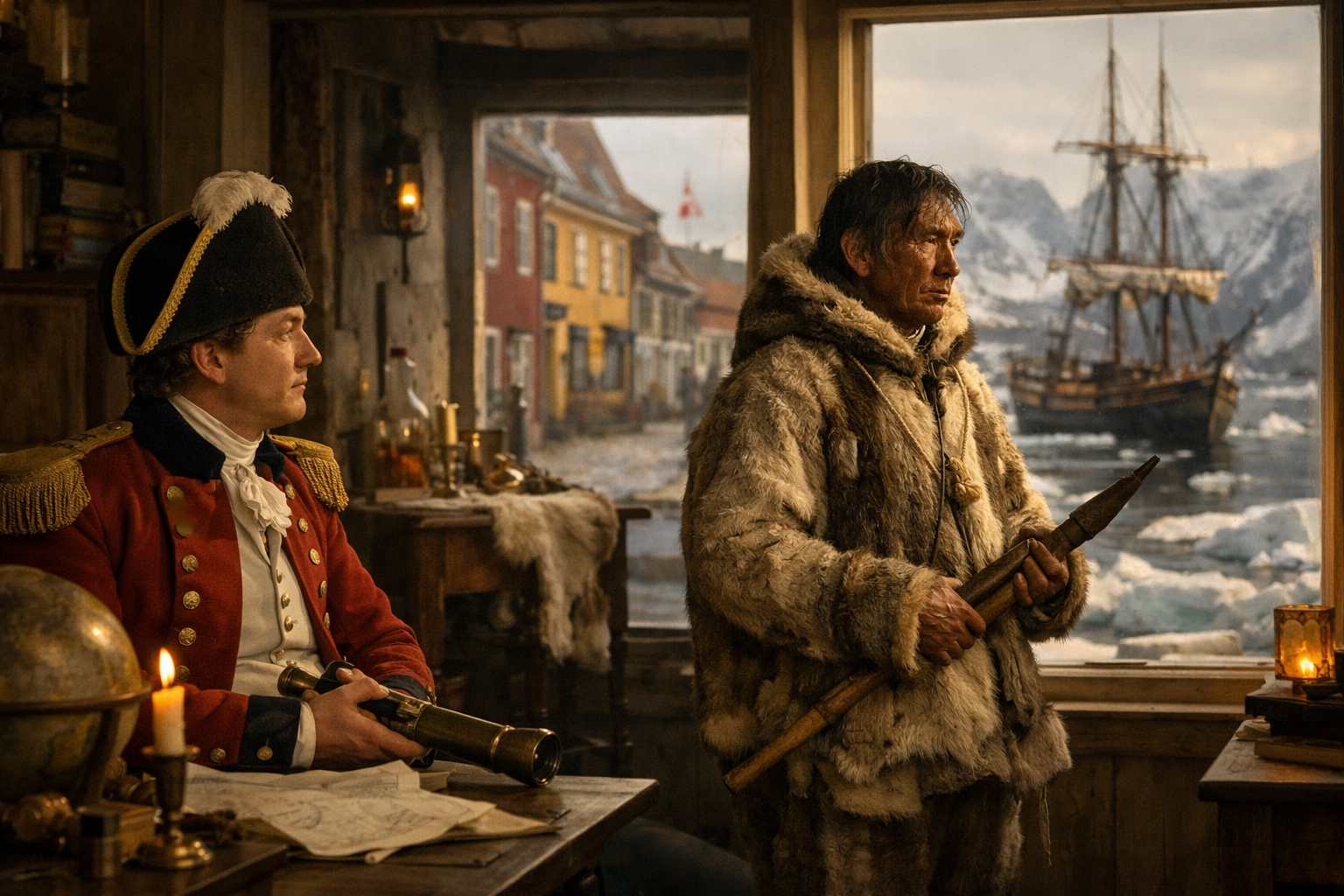
Introduction
Denmark's colonial history is a significant chapter in the nation's past that continues to influence its present-day relationships and territories. From the 17th century onwards, Denmark established control over distant lands, most notably Greenland and the Danish West Indies (now the U.S. Virgin Islands). Understanding this historical period is essential for anyone preparing for the Danish citizenship test, as it provides context for Denmark's modern constitutional structure and international relationships. Whether you're using Danify to study for your citizenship exam or simply interested in Danish history, this comprehensive guide will help you grasp the complexities of Denmark's colonial legacy.
The Danish Colonial Empire: An Overview
The Scope of Danish Colonialism
Denmark's colonial ambitions, while more modest than those of larger European powers, still resulted in significant territorial control. Danish colonies included:
- Greenland (established in the 17th century)
- The Faroe Islands (integrated into Danish rule)
- The Danish West Indies (Caribbean colonies)
- Various trading posts in Africa, India, and Asia
- Iceland (under Danish-Norwegian union)
Unlike the vast empires of Britain, France, or Spain, Denmark's colonial reach was more selective and concentrated on strategic trade routes and resources. This distinction is important for citizenship test candidates to understand when discussing Denmark's historical role in European expansion.
Motivations for Colonial Expansion
Danish colonial expansion was primarily driven by:
- Economic interests: Trade in sugar, spices, and other valuable commodities
- Strategic positioning: Controlling trade routes and establishing naval bases
- Religious missions: Spreading Christianity to distant territories
- National prestige: Competing with other European powers
Greenland: From Colonial Territory to Autonomous Region
Early Colonization and Development
Greenland represents Denmark's most significant and enduring colonial possession. Danish colonization began in earnest in 1721 when Hans Egede, a Norwegian-Danish missionary, established a settlement and began converting the indigenous Kalaallit (Inuit) population to Christianity. The Danish established a monopoly trade system, controlling all commerce between Greenland and the outside world.
For centuries, Greenland remained under direct Danish colonial administration, with limited self-governance and economic control exercised from Copenhagen. The territory's harsh climate and limited resources made it economically dependent on Danish subsidies.
Path to Autonomy
The 20th century witnessed Greenland's gradual transition from colony to autonomous territory:
- 1953: Greenland ceased being a colony and became an integral part of the Danish realm
- 1979: Home Rule was granted, allowing Greenlandic control over internal affairs
- 2009: Self-Government replaced Home Rule, further increasing autonomy while Denmark retained control of foreign policy and defense
- 2021: Greenland gained control over its own judicial system
Today, Greenland is an autonomous territory within the Danish Realm, with its own parliament (Inatsisartut) and government. This status is crucial knowledge for citizenship test applicants, as it demonstrates how Denmark's colonial legacy has evolved into a modern, autonomous arrangement.
Modern Status and Relations
While Greenland has substantial self-governance, Denmark remains responsible for foreign policy, security, and defense. The relationship is defined by the Kingdom of Denmark, which comprises Denmark proper, Greenland, and the Faroe Islands. Greenland maintains representation in the Folketing (Danish Parliament) and is an important strategic asset due to its Arctic location.
The Danish West Indies: Colonial Trade and Legacy
Establishment and Economic Importance
The Danish West Indies consisted of three main islands: St. Croix, St. Thomas, and St. John (now the U.S. Virgin Islands). Denmark acquired these territories between 1666 and 1733, primarily to establish sugar plantations and control Caribbean trade routes.
The Sugar Economy and Slavery
This is a difficult but essential part of Danish history: the Danish West Indies economy was built on slavery. Danish traders and planters imported enslaved Africans to work the sugar plantations, making the islands economically profitable but morally reprehensible. This period of Danish history represents a stain on the nation's conscience and is an important topic for citizenship test candidates to understand.
Key facts:
- Thousands of enslaved people were transported to the Danish West Indies
- The slave trade was officially abolished in 1803, though slavery continued
- Slavery in the Danish West Indies was finally abolished in 1848
- This history is now acknowledged and discussed as part of Danish historical education
Loss of the Colonies
In 1917, Denmark sold the Danish West Indies to the United States for 25 million dollars. This sale came during World War I and reflected Denmark's difficult position as a neutral nation. The transfer marked the end of Denmark's significant colonial presence in the Caribbean.
Understanding Danish Colonialism for the Citizenship Test
Key Concepts to Master
When preparing for your Danish citizenship examination with Danify or other study tools, focus on these essential points:
- Chronology: Know the dates of colonial establishment, major events, and transitions to autonomy
- Geographic scope: Understand which territories Denmark controlled and when
- Political evolution: Grasp how colonies transitioned to autonomous regions or were sold
- Constitutional implications: Recognize how colonial history shaped the modern Danish Realm structure
- Modern relationships: Understand current ties between Denmark and its former territories
Exam Preparation Tips
- Study the Kingdom of Denmark concept and its three constituent parts
- Understand Greenland's autonomous status and its significance
- Know the reasons for selling the West Indies and the geopolitical context
- Familiarize yourself with how Greenlandic representation works in Danish Parliament
- Recognize the importance of acknowledging difficult historical truths, including slavery
Conclusion
Denmark's colonial history is complex, multifaceted, and continues to shape the nation's modern identity and international relationships. From the long-standing connection with Greenland to the controversial legacy of the Danish West Indies, understanding this period is essential for anyone seeking to truly comprehend Denmark as a nation.
For citizenship test candidates, a nuanced understanding of how Denmark's colonial past has evolved into today's Kingdom of Denmark structure is invaluable. Whether you're using Danify to prepare for your exam or studying independently, remember that historical literacy is a cornerstone of citizenship knowledge.
Ready to deepen your understanding of Danish history and prepare comprehensively for your citizenship test? Start your study journey today with reliable resources and a commitment to mastering both the facts and the deeper historical context that makes Denmark unique.
References and Sources
Sources & AI note
This article was generated by AI using the sources listed here. Please verify important details in the original sources.
Official Danish government portal providing information about Denmark's structure, including the relationship between Denmark, Greenland, and the Faroe Islands.
https://denmark.dk/
Official website of Greenland's government, containing information about Greenlandic self-government, autonomy, and the relationship with Denmark.
https://naalakkersuisut.gl/en
Official Danish immigration and citizenship portal, providing resources for citizenship test preparation and information about integration into Danish society.
https://www.nyidanmark.dk/en
Danish Ministry of Foreign Affairs website containing official diplomatic and historical information about Denmark's international relationships and colonial heritage.
https://um.dk/en
The National Museum of Denmark holds extensive collections and educational materials about Danish colonial history, including artifacts and documentation from Greenland and the Danish West Indies.
https://natmus.dk/english/
Get study tips in your inbox
Exam guides, study strategies, and insider tips for both Danish exams, delivered for free.
Study smarter
Ready to pass your Danish exam?
Danify gives you practice questions, AI-powered hints, and progress tracking, everything you need to prepare with confidence.