Workers' Rights in Denmark: Understanding the Danish Labor Market Model
Discover how Denmark's unique labor market model protects workers' rights and creates a balanced workplace. Learn what you need to know for the Danish citizenship test.
Introduction
Denmark has one of the most progressive and well-regulated labor markets in the world. The Danish labor market model, often called the "Danish Model," is built on trust, dialogue, and cooperation between employers, employees, and the government. Understanding workers' rights in Denmark is essential not only for anyone planning to work in the country but also for those preparing for the Danish citizenship test, which frequently covers employment regulations and workplace culture.
Whether you're a prospective immigrant, job seeker, or someone studying for the citizenship exam, this guide will help you understand the key principles of Danish workers' rights and how they shape everyday work life in Denmark.
The Danish Model: A Foundation Built on Cooperation
What is the Danish Model?
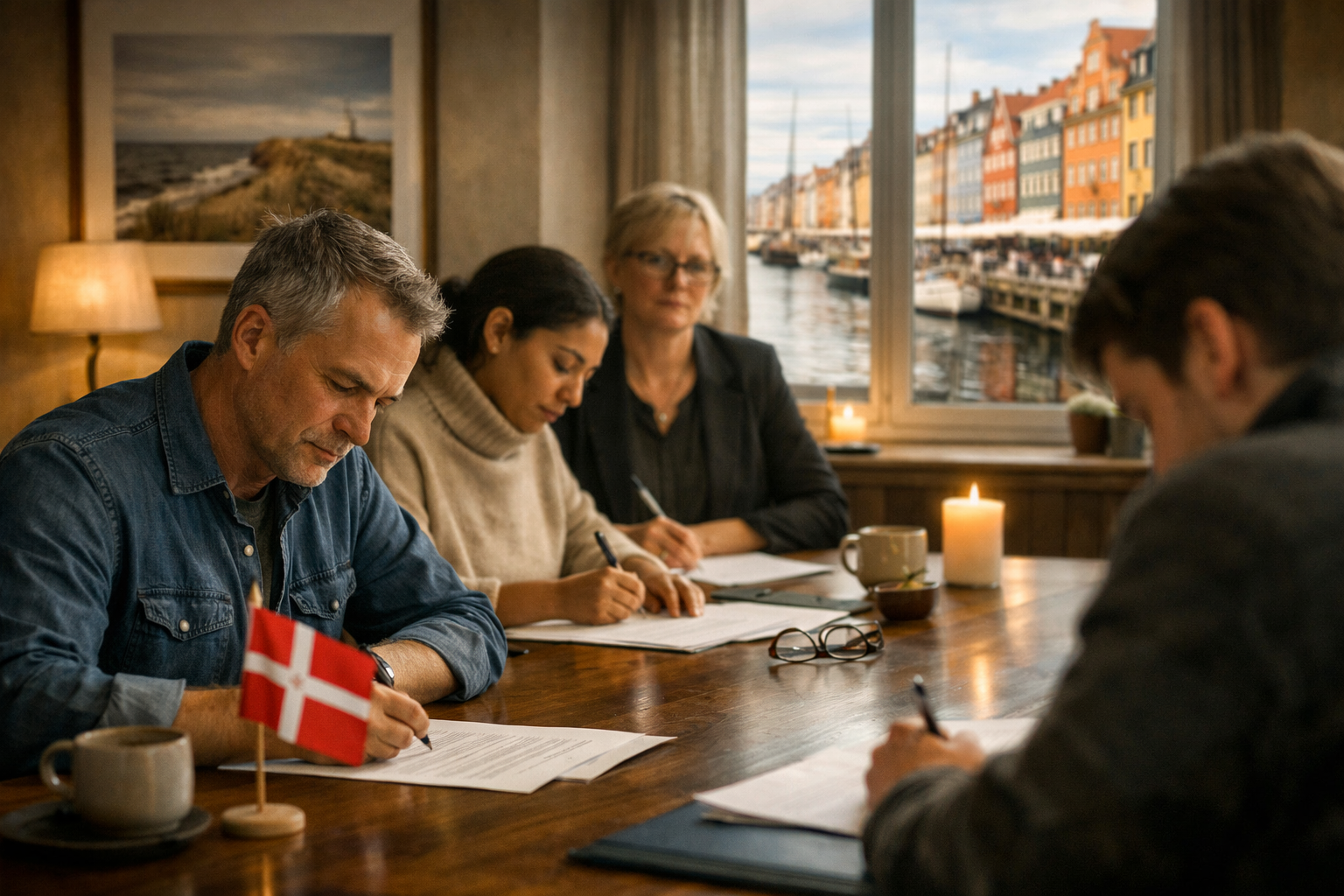
The Danish Model is a unique approach to labor relations that emphasizes collective bargaining, flexibility, and mutual trust between employers and employees. Rather than relying heavily on state legislation, the model depends on agreements negotiated directly between employers and trade unions.
Key characteristics include:
- Collective agreements: Most Danish workers are covered by collective bargaining agreements negotiated between unions and employer organizations
- Flexibility: Employers have relatively flexible hiring and firing practices
- Social security: Strong unemployment insurance and welfare systems provide a safety net for workers
- Tripartite cooperation: Government, employers, and unions work together to shape labor policy
This balance between flexibility and security is what makes Denmark's labor market distinctive and efficient.
The Role of Trade Unions
Trade unions play a central role in the Danish labor market. Approximately 65-70% of Danish workers are union members, one of the highest rates in the world. Unions negotiate collective agreements that establish wages, working hours, vacation time, and other employment conditions.
For citizenship exam preparation with Danify, remember that understanding the importance of unions in Danish society is crucial, as it reflects the country's collaborative approach to workplace issues.
Key Workers' Rights and Protections
Wages and Working Hours
Denmark does not have a statutory minimum wage. Instead, minimum wages are determined through collective bargaining agreements between unions and employer organizations. This system ensures that wages are competitive and reflect market conditions within each sector.
Regarding working hours:
- The standard working week is typically 37-40 hours
- Overtime is regulated through collective agreements
- Workers are entitled to paid breaks
- Rest periods between work days are protected
Holiday and Vacation Rights
All Danish employees are entitled to 6 weeks of paid vacation per year, making Denmark one of the most generous countries for vacation rights. This includes:
- Minimum 25 working days of paid holiday annually
- An additional week often provided through collective agreements
- Public holidays (typically 9-10 per year) are also paid
- Workers can plan vacation time in consultation with their employer
Protection Against Unfair Dismissal
Denmark offers reasonable protections against unfair dismissal, though the system differs from many other countries:
- Employers must have fair and objective grounds for terminating employment
- Dismissal procedures are outlined in collective agreements
- Workers can seek compensation if dismissed without just cause
- Notice periods vary by agreement and position
- Employees can appeal dismissals through union representation or labor courts
Parental Leave and Family Rights
Denmark has comprehensive parental leave provisions:
- Mothers are entitled to 4 weeks before and 14 weeks after childbirth (18 weeks total)
- Fathers are entitled to 2 weeks of paid leave
- Parents can share additional leave beyond these minimums
- Income replacement is typically 100% during statutory leave
- Both parents have job protection during parental leave
Workplace Safety and Working Conditions
Health and Safety Standards
Denmark maintains strict workplace safety regulations under the Working Environment Act. Employers must:
- Conduct risk assessments to identify workplace hazards
- Implement safety measures and provide safety equipment
- Train employees on proper safety procedures
- Maintain a safe and healthy work environment
- Report serious accidents to authorities
Workers have the right to:
- Request safety inspections
- Refuse dangerous work without penalty
- Receive safety training
- Report hazards without fear of retaliation
Discrimination and Equal Treatment
Danish law prohibits discrimination based on:
- Race, color, or ethnic origin
- Religion or belief
- Disability
- Age
- Sexual orientation or gender identity
- Gender
- Pregnancy or maternity status
Employers must ensure equal pay for equal work and provide reasonable accommodations for employees with disabilities.
Preparing for the Danish Citizenship Test: Key Takeaways
When studying workers' rights for the citizenship exam, focus on these essential points:
- Denmark relies on collective agreements rather than statutory minimum wages
- The Danish Model emphasizes cooperation between employers, employees, and unions
- Workers receive 6 weeks of paid vacation annually
- Trade unions are fundamental to the Danish labor market
- Strong protections exist for health, safety, and equal treatment
- Parental leave is comprehensive and well-protected
Using study tools like Danify can help you master these concepts and prepare effectively for citizenship exam questions about the Danish labor market and workers' rights.
Conclusion
Denmark's approach to workers' rights reflects the country's values of trust, equality, and social responsibility. The Danish Model demonstrates that a flexible labor market and strong worker protections can coexist successfully. Whether you're planning to work in Denmark or preparing for citizenship, understanding these principles is essential.
The emphasis on collective bargaining, vacation time, parental leave, and workplace safety shows Denmark's commitment to creating a balanced and fair working environment. As you prepare for your Danish citizenship test or plan your career in Denmark, remember that the labor market is built on mutual respect and cooperation.
Ready to deepen your knowledge of Danish society and labor rights? Download Danify today to access comprehensive study materials, practice questions, and expert guidance for the Danish citizenship test. Start your journey toward becoming a Danish citizen with confidence!
Study Tip: Create flashcards with key terms like "collective agreement," "the Danish Model," and "working hours" to reinforce your understanding for the citizenship exam.
Sources & AI note
This article was generated by AI using the sources listed here. Please verify important details in the original sources.
Official Danish government agency providing information on workplace safety, health regulations, and workers' rights in Denmark.
https://arbejdstilsynet.dk/en
Official Danish government portal with comprehensive information about employment rights, contracts, minimum wages, and labor conditions for workers in Denmark.
https://borger.dk/en/work-employment
Official government resource for immigrants containing information about the Danish labor market, employment rights, and work regulations.
https://www.nyidanmark.dk/en/coming-to-denmark/work-in-denmark
Official Danish government website explaining the Danish Model, labor market principles, and workers' rights in Denmark.
https://denmark.dk/society-and-business/work-in-denmark
United Nations agency providing verified international perspectives on Danish labor practices, collective bargaining systems, and workers' protections.
https://www.ilo.org/
Get study tips in your inbox
Exam guides, study strategies, and insider tips for both Danish exams, delivered for free.
Study smarter
Ready to pass your Danish exam?
Danify gives you practice questions, AI-powered hints, and progress tracking, everything you need to prepare with confidence.