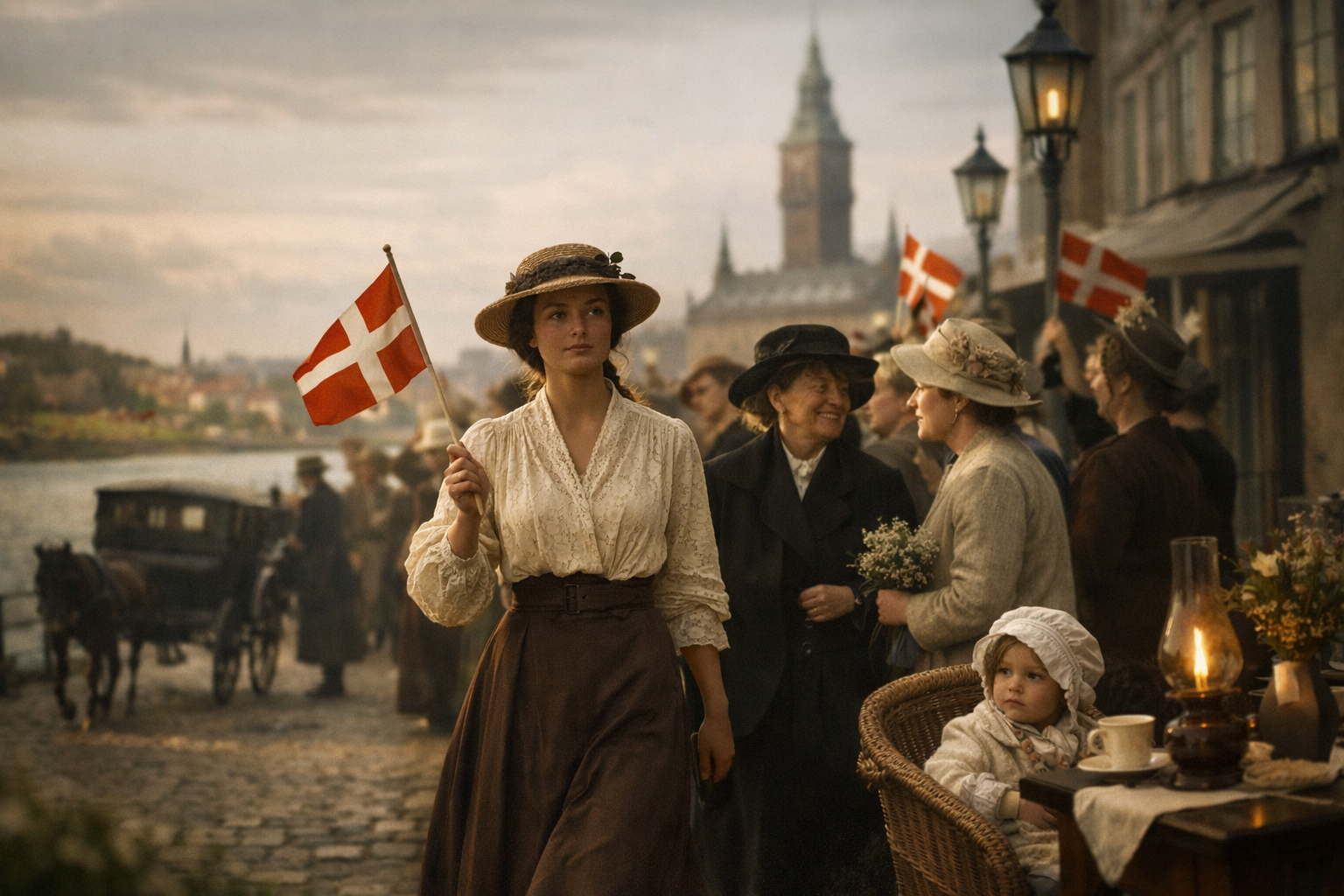
How Denmark Became a Democracy: Key Milestones from 1849
Discover the pivotal moments that transformed Denmark into a modern democracy, starting with the 1849 Constitution. Learn the essential historical milestones you need to know for the Danish citizenship test.

How Denmark Became a Democracy: Key Milestones from 1849
Denmark's journey to becoming a fully democratic nation is a fascinating chapter in European history. Understanding this transformation is not only enriching for anyone interested in Danish culture and politics, but it's also essential knowledge for the Danish citizenship test. Whether you're preparing for your exam through Danify or other resources, grasping these key milestones will give you valuable context about the values that shape modern Danish society.
In this post, we'll explore the critical turning points that led Denmark from absolute monarchy to the thriving democracy it is today—a journey that began with a remarkable document in 1849.
The 1849 Constitution: Denmark's Democratic Foundation
What Changed in 1849?
The year 1849 marks a watershed moment in Danish history. King Frederick VII signed the Danish Constitution (Grundloven), which fundamentally transformed Denmark's political system. This wasn't a revolution in the violent sense, but rather a negotiated transition that reflected broader European movements toward constitutional governance during this era.
Before 1849, Denmark was an absolute monarchy, meaning the king held virtually unlimited power. The constitution changed this dramatically by:
- Establishing a constitutional monarchy where the king's power was limited by law
- Creating the Rigsråd (The Royal Council of the Realm), a representative assembly
- Introducing individual rights and freedoms, including freedom of speech and press
- Setting the foundation for a parliamentary system that would evolve over the following decades
The 1849 Constitution was influenced by the revolutionary spirit sweeping Europe and the demands of Danish citizens for a voice in governance. It represented a compromise between reformers who wanted democracy and the monarchy that wished to maintain its authority.
Key Features for the Citizenship Test
When preparing for your Danish citizenship exam, remember these essential aspects of the 1849 Constitution:
- It guaranteed religious freedom (though Lutheranism remained the state church)
- It abolished absolute royal power
- It introduced electoral representation, though voting rights were initially limited to men of property
- It established the principle that laws would be made by the king in cooperation with the people's representatives
The Path to Universal Male Suffrage (1849-1915)
Gradual Expansion of Voting Rights
While 1849 was revolutionary, Denmark's full democratic development took decades. The constitution initially granted voting rights only to men meeting strict property and income requirements. This meant the vast majority of the population—women, poor men, and tenants—still had no voice in government.
The struggle for universal suffrage became the driving force of Danish political life throughout the late 19th and early 20th centuries:
- 1849-1870s: Working-class movements and the emerging Social Democratic Party demanded broader voting rights
- 1884: A major political crisis occurred when the Rigsråd rejected the government's budget. This conflict, known as the "Constitutional Crisis," highlighted tensions between popular representation and royal authority
- 1901: Denmark achieved a crucial milestone when J.C. Christensen became prime minister with support from the Rigsråd majority, establishing the principle that governments must have parliamentary confidence—a cornerstone of modern democracy
- 1915: Universal male suffrage was finally achieved, meaning all men over 30 could vote
Women's Suffrage: The Final Democratic Step
Women's fight for voting rights in Denmark paralleled movements across Europe:
- 1908: Women gained local voting rights in municipal elections
- 1915: Women received national voting rights on equal terms with men (though still limited to those over 30)
- 1921: The age requirement was lowered to 23 for both genders, achieving true universal adult suffrage
This timeline is particularly important for citizenship test preparation because it demonstrates Denmark's commitment to gradual, inclusive democratic reform.
The Modern Danish Constitution of 1953
Why a New Constitution?
After World War II, Denmark needed to modernize its governance structure. The 1849 Constitution, while revolutionary for its time, had become outdated. The 1953 Constitution maintained the fundamental democratic principles established in 1849 but updated them for the modern era.
Key Changes and Their Significance
The 1953 Constitution introduced several important democratic refinements:
- Abolished the upper house (Landsting), creating a unicameral parliament (Folketing) with 179 members
- Clarified parliamentary sovereignty: Laws are made by the Folketing with royal assent
- Strengthened individual rights and civil liberties
- Enabled Denmark's participation in international organizations like NATO and the European Union
- Defined the succession and modern role of the monarchy
This constitution remains the foundation of Danish governance today, with amendments made in 1953, 1972 (relating to EU membership), and 2009 (regarding royal succession and gender equality).
Democracy in Practice: What Modern Denmark Inherited
The Democratic Values
Denmark's democratic development from 1849 onward established core values that remain central to Danish society:
- Rule of law: Government authority is limited by constitutional law
- Popular sovereignty: Power ultimately rests with the people
- Representation: Citizens have voices through elected representatives
- Consensus-building: Rather than winner-take-all politics, Danish democracy emphasizes compromise and dialogue
- Decentralization: Local and regional governments hold significant autonomy
Why This Matters for Citizenship
When you take the Danish citizenship test, understanding these historical milestones isn't just about memorizing dates. It's about grasping the democratic principles that define Danish society. The test assesses your understanding that Denmark is a functioning democracy where rights and responsibilities are balanced, and where political participation is valued.
Tools like Danify can help you contextualize these historical facts within the broader framework of Danish civic values, making the material more meaningful and memorable.
Conclusion
Denmark's transformation from an absolute monarchy in 1849 to a modern parliamentary democracy was neither instantaneous nor inevitable. It required generations of citizens advocating for representation, progressive political leaders willing to negotiate change, and a willingness to reform institutions gradually.
The 1849 Constitution planted the seeds of democracy. The battles for universal suffrage throughout the late 19th and early 20th centuries nurtured its growth. The 1953 Constitution modernized the system for the contemporary world. Together, these milestones created the democratic foundation that Denmark still stands upon today.
As you prepare for the Danish citizenship test, remember that these aren't just historical facts—they're the story of how a nation committed itself to the principles of representation, rule of law, and popular participation. These values remain at the heart of what it means to be part of Danish society.
Ready to deepen your understanding of Danish history and culture? Start your citizenship exam preparation with Danify today and ensure you're thoroughly prepared for this important milestone.
Sources & AI note
This article was generated by AI using the sources listed here. Please verify important details in the original sources.
Official information about the Danish Constitution from the Folketing (Danish Parliament), including historical background and current constitutional framework.
https://www.folkeristinget.dk/about-us/the-constitution
Official Danish immigration authority resource providing information about Danish history, political system, and civic culture relevant to citizenship applicants.
https://nyidanmark.dk/en
Official Danish government tourism and information portal with comprehensive overview of Danish history from medieval times through the development of democracy.
https://denmark.dk/about-denmark/history
Authoritative encyclopedic reference covering Denmark's transition to democracy, the 1849 Constitution, and development of parliamentary government.
https://www.britannica.com/place/Denmark
Official Royal House of Denmark website providing information about the constitutional monarchy system and the historical development of the Danish state.
https://kongehuset.dk/english/the-monarchy/
Get study tips in your inbox
Exam guides, study strategies, and insider tips for both Danish exams, delivered for free.
Study smarter
Ready to pass your Danish exam?
Danify gives you practice questions, AI-powered hints, and progress tracking, everything you need to prepare with confidence.