Danish Family Law: Marriage, Divorce, Custody and Naming Rules
Learn about Danish family law including marriage requirements, divorce procedures, custody arrangements, and child naming rules. Essential knowledge for your Danish citizenship exam.
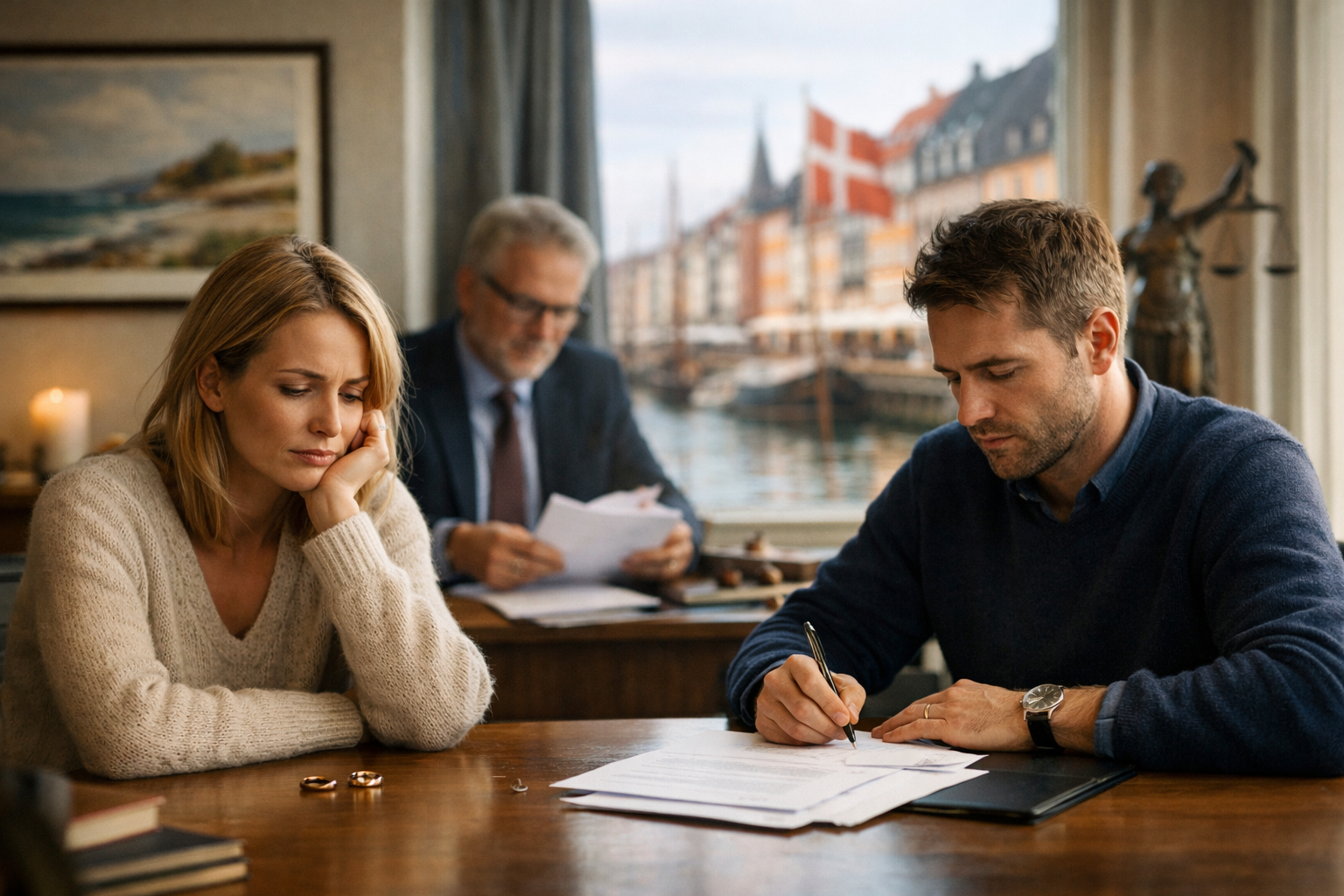
Understanding Danish Family Law: A Guide for Citizenship Candidates
Danish family law is an important topic covered in the citizenship test, reflecting the values and legal framework of Danish society. Whether you're preparing for your citizenship exam or simply want to understand how families are regulated in Denmark, this comprehensive guide covers marriage, divorce, custody, and naming rules. With resources like Danify, you can prepare effectively for these questions and gain deeper insight into Danish legal traditions.
Danish family law is based on principles of equality, individual rights, and child welfare. Understanding these concepts will not only help you pass your citizenship test but also give you practical knowledge if you're building a life in Denmark.
Marriage in Denmark: Requirements and Procedures
Legal Requirements for Marriage
Marriage in Denmark is a legal contract between two adults, and there are specific requirements you must meet:
- Age requirement: Both parties must be at least 18 years old
- Capacity: Both parties must have the mental capacity to consent to marriage
- No existing marriage: Neither party can be married to someone else
- No prohibited relationships: You cannot marry a close relative (parents, siblings, grandparents)
- Danish residency: At least one party should typically be resident in Denmark or a Danish citizen
Unlike many countries, Denmark does not require a waiting period between the engagement and marriage ceremony. However, you must notify the local municipality (kommune) at least 4 weeks before your planned wedding.
The Marriage Process
The marriage process in Denmark involves these steps:
- Notice of intent: One or both parties must register their intention to marry at the local municipality
- Documentation: You'll need valid identification, and if applicable, proof of divorce or death certificate from previous marriages
- Ceremony: Marriage can be performed by a civil registrar or an authorized religious official
- Registration: The marriage is officially registered once the ceremony is complete
Danmark recognizes marriages performed in other countries, provided they meet Danish legal requirements. This is particularly relevant if you've married abroad before moving to Denmark.
Divorce: Procedures and Key Principles
Grounds for Divorce
Danish law allows for no-fault divorce, meaning you don't need to prove wrongdoing by your spouse. The primary grounds for divorce are:
- Mutual agreement: Both parties consent to the divorce
- Separation period: If one party wants a divorce without the other's consent, there's typically a 6-month cooling-off period
- Irretrievable breakdown: After the separation period, divorce can be granted
The Divorce Process
The divorce procedure depends on whether both parties agree:
Uncontested divorce (mutual agreement):
- Both parties agree on all terms
- Process is quicker and less expensive
- Can often be finalized within 3-6 months
- The couple can submit a joint application to the court
Contested divorce:
- One party disputes the divorce or disagrees on terms
- Requires a 6-month separation period before proceeding
- May involve court proceedings if agreement cannot be reached
- Takes longer and typically involves legal representation
Division of Assets and Maintenance
Danish law follows principles of fair division of marital assets:
- Marital property: Assets acquired during the marriage are generally divided equally
- Personal property: Assets owned before marriage or inherited typically remain with the original owner
- Spousal support: The court may order one spouse to pay maintenance based on financial circumstances and needs
- Pension rights: Pensions acquired during marriage are subject to division
Child Custody and Parental Responsibility
Sole vs. Joint Custody
Danish law prioritizes the best interests of the child. Custody arrangements can be:
- Joint custody: Both parents share parental responsibility (most common arrangement)
- Sole custody: One parent has primary responsibility (less common, granted only when it serves the child's best interest)
Parental Responsibility
Parental responsibility includes:
- Making decisions about education and healthcare
- Determining where the child lives
- Managing the child's finances and property
- Representing the child in legal matters
Married parents automatically have joint parental responsibility. Unmarried parents must register joint responsibility with the municipality, or one parent retains sole responsibility.
Custody Arrangements and Residence
The court considers several factors when determining custody:
- The child's relationship with each parent
- Each parent's ability to provide care
- The child's own wishes (depending on age and maturity)
- Stability and continuity of care
- The proximity of parents' residences
Shared residence is increasingly common in Denmark, where children spend roughly equal time with both parents. This arrangement reflects the equality principle fundamental to Danish law.
Child Support and Maintenance
Both parents have a financial obligation to support their children:
- Support continues until the child turns 18 (or up to 24 if the child is in education)
- The amount is typically based on the parents' incomes
- The court can establish support amounts, or parents can agree privately
- Support obligations are enforceable through the municipality
Naming Rules: First Names and Surnames
First Name Regulations
Denmark has specific regulations regarding children's first names:
- Names must be Danish: Names should be usable within the Danish naming tradition, though foreign names may be approved if deemed reasonable
- Name approval: Names can be rejected if they're considered inappropriate or offensive
- Religious consideration: Names based on religious beliefs are generally accepted
- Approval process: Parents apply to the municipality, and if rejected, they can appeal to the Ministry of Ecclesiastical Affairs
Surname Rules
Danish surname conventions include:
- Patronymic tradition: Traditional Danish surnames often use "-sen" (son of) or "-sen" endings, though this is not required
- Parental choice: Children can take either parent's surname or a hyphenated combination
- Name changes: After age 18, individuals can request surname changes through the municipality
- Gender-neutral approach: Modern Danish naming practices are increasingly gender-neutral
Preparing for Your Citizenship Exam with Danify
Family law questions on the Danish citizenship test often focus on understanding the principles behind Danish regulations rather than memorizing specific details. Key concepts include:
- The emphasis on equality and individual rights
- The prioritization of child welfare in custody matters
- The no-fault divorce system reflecting modern values
- Gender-neutral and inclusive naming practices
Using study tools like Danify can help you understand these principles in context and practice with realistic exam questions.
Conclusion: Family Law and Danish Society
Danish family law reflects the country's core values of equality, individual autonomy, and child welfare. Whether you're preparing for your citizenship exam or establishing your family life in Denmark, understanding these laws is essential. The rules governing marriage, divorce, custody, and naming all demonstrate Denmark's commitment to fair treatment and the best interests of all family members.
As you prepare for your citizenship test, focus on understanding the reasoning behind these laws rather than just the rules themselves. This deeper understanding will help you answer exam questions more effectively and appreciate the Danish legal system.
Ready to ace your citizenship exam? Start your journey with Danify today and master Danish family law along with other essential citizenship test topics. Download the app and begin your preparation with confidence!
Sources & AI note
This article was generated by AI using the sources listed here. Please verify important details in the original sources.
Official Danish government portal providing comprehensive information about marriage and divorce procedures, requirements, and regulations for residents in Denmark.
https://www.borger.dk/familie-og-bolig/Ægteskab-og-skilsmisse
Official Danish government resource detailing parental responsibility, custody arrangements, and child-related legal matters under Danish family law.
https://www.borger.dk/familie-og-bolig/Boern-og-foraldremyndighed
Official Danish Immigration Service portal providing information on Danish regulations, including guidelines for naming children according to Danish law.
https://www.nyidanmark.dk/en/
Official Danish government website offering general information about Danish society, culture, and legal systems, including family law principles.
https://denmark.dk/
Danish court administration website providing official information about family law proceedings, child support regulations, and court procedures.
https://www.domstol.dk/
Get study tips in your inbox
Exam guides, study strategies, and insider tips for both Danish exams, delivered for free.
Study smarter
Ready to pass your Danish exam?
Danify gives you practice questions, AI-powered hints, and progress tracking, everything you need to prepare with confidence.